
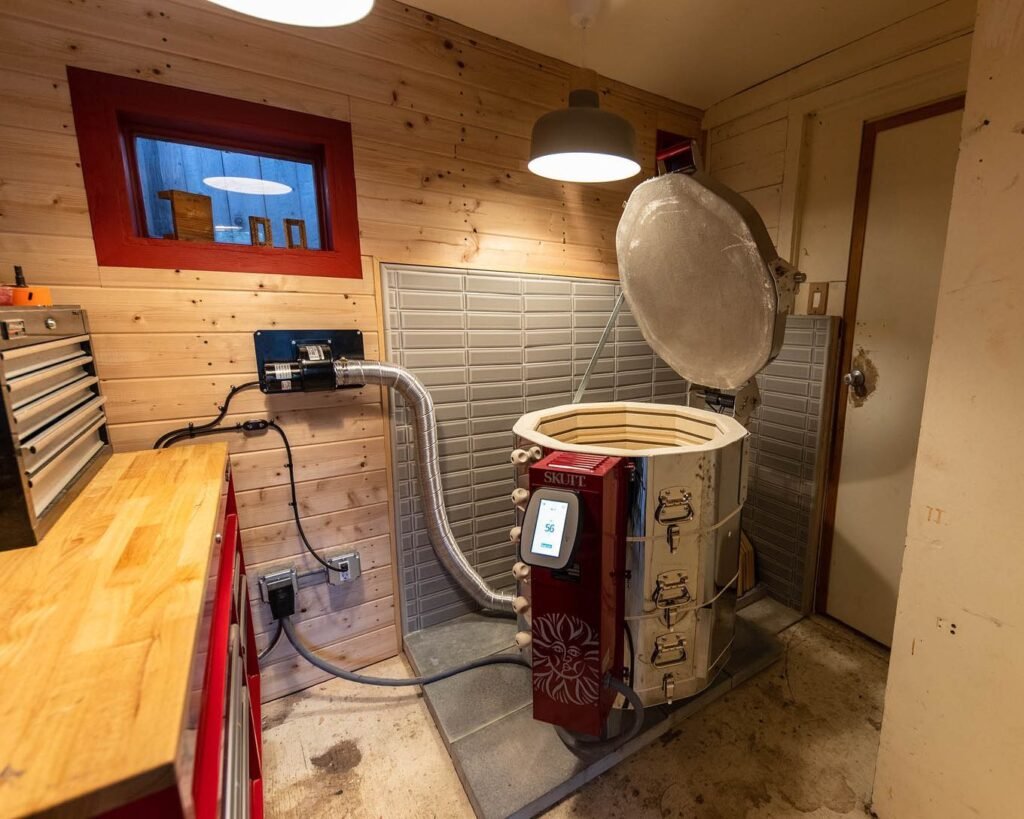
Skutt 1027 electrical needs come straight from Skutt’s own spec sheet. It draws 48 amps at 240V. It needs a 60-amp breaker, number 6 copper wire, and a NEMA 6-50 outlet. This is a real 240V install, not something you can run off a normal household outlet. Most homes need an electrician to add a new circuit for this kiln instead.
This guide covers exactly what that installation involves. It also covers what it typically costs, plus a few real-world details that catch first-time kiln owners off guard.
The Real Numbers, Straight From Skutt
At 240V, the KM-1027 draws 48 amps and uses 11,520 watts. The 208V version draws the same 48 amps but instead uses slightly less power at 9,984 watts. Both versions call for the same wire size and breaker rating.
Skutt calls for number 6 copper wire and a 60-amp breaker for this draw. The plug type is a NEMA 6-50. This is a common 50-amp, 240V outlet used for other high-draw devices too, like some larger electric ranges and welders.
These numbers aren’t a rough estimate. They come directly from Skutt’s own kiln spec sheet. That sheet lists exact amperage, wattage, wire gauge, and breaker size. It covers every model in their lineup, including the 1027, 1018, 818, and 1227.
A Real Wiring Detail Worth Knowing
Here’s something that catches even experienced electricians off guard. A 48-amp continuous load technically needs to run on a 60-amp breaker under the National Electrical Code. Code requires the breaker to be sized well above the actual draw for anything running continuously.
But kiln manufacturers, including Skutt, ship these kilns with a 50-amp plug as standard. Code technically doesn’t allow a 50-amp receptacle on a 60-amp circuit. Some electricians handle this by installing a 60-amp receptacle and swapping the plug on the kiln’s cord to match. Others follow local interpretation and use the standard 50-amp setup. This is exactly the kind of detail worth discussing directly with your electrician. Don’t assume any single approach is universal.
Do You Need an Electrician?
In almost every case, yes. This isn’t a job for DIY wiring. A 60-amp circuit at this amperage needs a licensed electrician. That’s true both for safety and because most local codes require it for fixed 240V gear.
Skutt’s own papers note that local codes can vary and always come first over general tips. Check your specific needs with a licensed electrician rather than relying on general guidance alone. Skutt also recommends sharing your kiln’s exact electrical specs with your electrician ahead of time. Kilns don’t tolerate voltage swings the way many other appliances do. Skutt specifically advises that home voltage should measure within plus or minus 3 percent of the kiln’s rated voltage. That range keeps firing steady and reliable.
What Installation Typically Costs
Real costs vary more than most buyers expect. Say your electrical panel already has spare capacity and the kiln will sit close to it. A licensed electrician can often run a dedicated circuit for $500 to $900 in that case. Now say the kiln needs to sit farther from the panel. Maybe it’s in a detached garage, or your panel is already near capacity. That number can climb to $1,200 to $2,500. Older homes that need a full panel or service upgrade can push costs past $3,000.
One potter’s real, documented example is worth sharing here. Installing a dedicated 240V circuit for a Skutt KMT-1027 cost around $1,500 in Massachusetts. That lines up closely with the general range above. Her full kiln setup ran close to $7,000 total. That included the kiln itself, the electrician, kiln furniture, and a vent system. That full picture is worth keeping in mind. If you’re budgeting for the kiln price alone, you haven’t yet priced out everything else that comes with it.
Get a specific quote before you buy the kiln, especially if you’re not sure your panel has room to spare. This cost is a real part of your total budget too, not just the kiln price itself.
Don’t Forget the Vent System
Electrical setup isn’t the only real cost that comes with a kiln this size. A vent system pulls fumes out of the kiln during firing and pushes them outside through ducting. For a kiln of this size, this isn’t really optional. It protects both your lungs and the kiln’s own elements and electronics from the buildup that comes with regular firing.
Budget roughly $250 to $450 for the vent system itself. Add another $50 to $150 for ducting. The exact cost depends on how far you need to run it to reach an exterior wall. This is a separate cost from the electrical work. It’s easy to forget when you’re focused on the kiln price and the breaker install.
Planning for the Future
If there’s any chance you’ll want a larger kiln down the road, it’s worth telling your electrician now. Running heavier wire than you currently need costs more upfront. It saves you from tearing open a wall to rewire later if you upgrade, though. Skutt’s own documentation makes the same recommendation directly.
Quick Reference: Skutt KM-1027 Electrical Specs
| Spec | 240V Version | 208V Version |
|---|---|---|
| Amperage | 48 amps | 48 amps |
| Wattage | 11,520 watts | 9,984 watts |
| Wire Gauge | Copper #6 | Copper #6 |
| Breaker Size | 60 amp | 60 amp |
| Receptacle | NEMA 6-50 | NEMA 6-50 |
Keep this table handy when you’re getting quotes from electricians. Sharing exact numbers upfront gets you a faster, more accurate quote. A vague description like “a pottery kiln” won’t cut it.
One More Cost Some Buyers Miss: Permits
Depending on where you live, adding a new circuit like this may require an electrical permit and a follow-up inspection. Permit costs vary widely by city and state. Some areas charge just a small flat fee. Others run several hundred dollars for the same kind of job. Ask your electrician whether a permit applies when you get your quote. That way it’s part of your total cost, not a surprise later.
Skutt KM-1027
View current pricing and availability
A 7 cubic foot kiln built for real studio output, needing a dedicated 240V, 60-amp circuit for installation.
Ready to Plan Your Installation?
Browse our complete kiln collection to compare electrical requirements across every model we carry.
