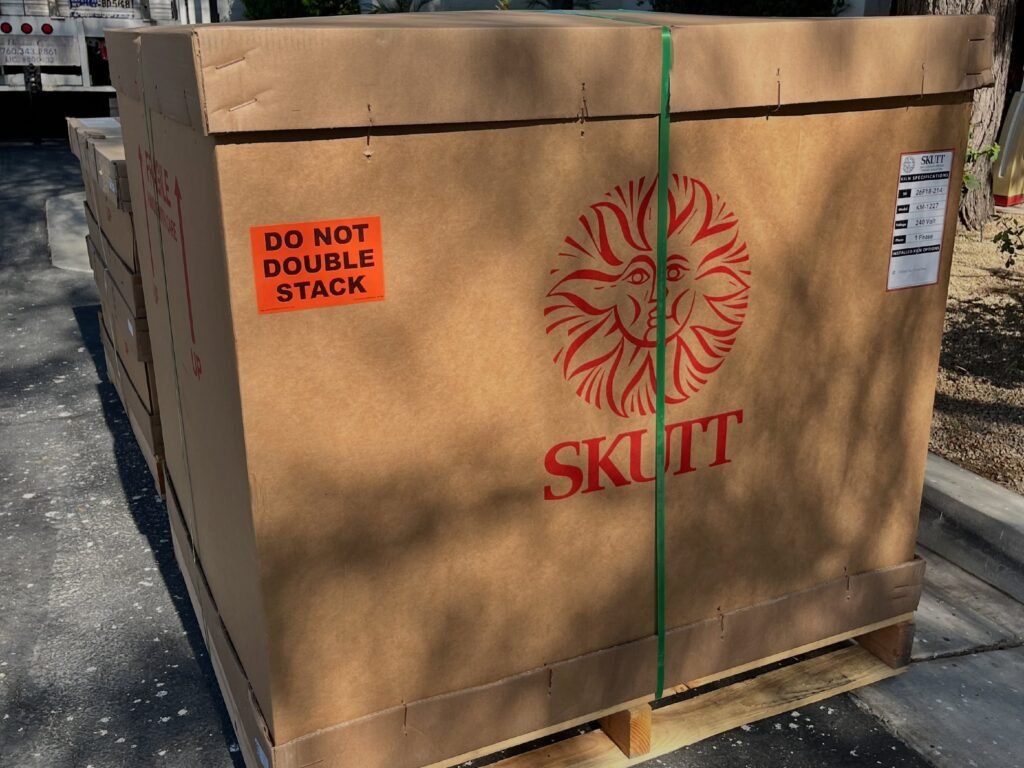
The Skutt KM-614 runs on 120V power, but it isn’t quite as simple as plugging into any standard wall outlet. Most sources agree it needs a dedicated 20-amp outlet. Specifically, that’s a NEMA 5-20 type, not the common 15-amp outlet found in most rooms. This is still far simpler than the 240V setup a larger kiln needs, but it’s not truly plug-and-play either.
This guide covers what the 120V claim actually means, and what to check before you buy.
The Real Electrical Requirement
The KM-614 draws 20 amps on a 115-120V circuit. That requires a NEMA 5-20 outlet. It has a horizontal slot alongside the vertical ones, different from the standard 15-amp outlet most household circuits use.
Many homes already have a 20-amp circuit in the kitchen, garage, or laundry area. This often means you can skip a full rewiring project. Still, confirm your specific outlet type before assuming your current setup works.
Why This Still Beats a 240V Kiln
Even with the 20-amp requirement, this is a much smaller electrical ask than a larger kiln’s 240V circuit. You’re not looking at a full panel upgrade or a dedicated high-voltage line.
Say your home already has a 20-amp outlet available, or an electrician can add one. Either way, you’re looking at a far simpler and cheaper install than a full-size studio kiln requires.
What to Check Before You Buy
Look at your electrical panel and existing outlets for anything already rated at 20 amps. A kitchen or workshop area is a common place to find one.
If you don’t have one available, ask an electrician for a quote to add a dedicated 20-amp circuit. This is a much smaller job than installing a 240V line for a larger kiln.
Skutt KM-614-3
View current pricing and availability
Fires to Cone 6 on a 20-amp, 120V circuit, with energy-efficient 3-inch brick and a 2-year warranty.
Ready to Check Your Setup?
Browse our complete kiln collection to compare electrical requirements across every model.