
Pottery wheel speed settings change at every stage of throwing, not just once at the start. Centering calls for your fastest speed, usually 200 to 300 RPM. Shaping and finishing call for your slowest, often down around 30 to 40 RPM. Knowing which speed fits which stage makes the whole process noticeably easier. This matters most for anyone still building confidence at the wheel.
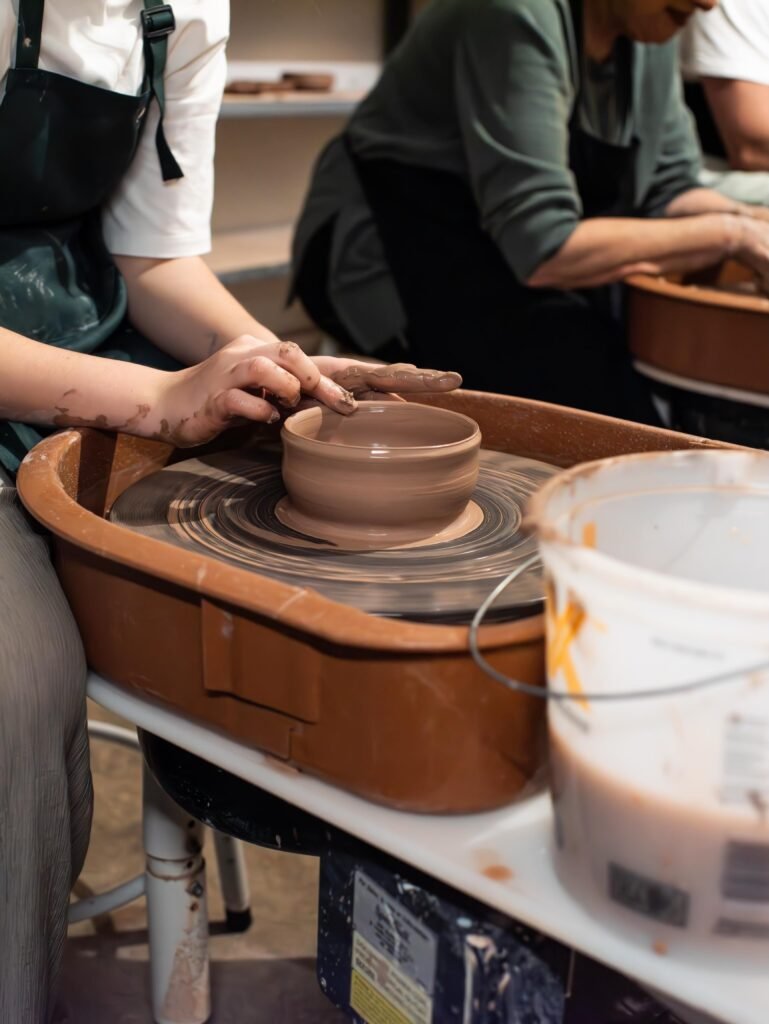
This guide breaks down what each speed range is actually for. It also covers why matching speed to stage matters more than picking one comfortable setting and sticking with it.
Understanding Pottery Wheel Speed Settings by Stage
Every stage of throwing asks something different from the clay. Centering needs momentum to move a lump of clay into balance. Shaping needs fine control instead. A single fixed speed can’t serve both needs well.
Beginners often make the mistake of finding one speed that feels comfortable and staying there the whole session. This works against you more than it helps. The wrong speed at the wrong stage makes basic techniques harder than they need to be.
Centering: Your Fastest Speed
Centering works best at a high speed, typically 200 to 300 RPM depending on your wheel’s top range. Speed here gives you the centrifugal force needed to move clay into a true, balanced center.
A wheel spinning too slowly during centering makes the clay move more than your hands do. This fights against the whole point of the technique. Going faster, not slower, is genuinely the easier path once you get past the initial nervousness of a fast-spinning wheel.
Opening and Pulling Walls: Moderate Speed
Once you’re centered, drop to a moderate speed for opening the clay and pulling up the walls. Most potters land somewhere around 80 to 150 RPM for this stage. The exact number varies by piece size and personal feel.
Larger pieces generally need slower speeds here than smaller ones. A big bowl or platter wobbles and distorts more easily at high speed than a small mug does. Dropping speed further as your piece grows in diameter is a normal, expected adjustment.
Shaping and Finishing: Your Slowest Speed
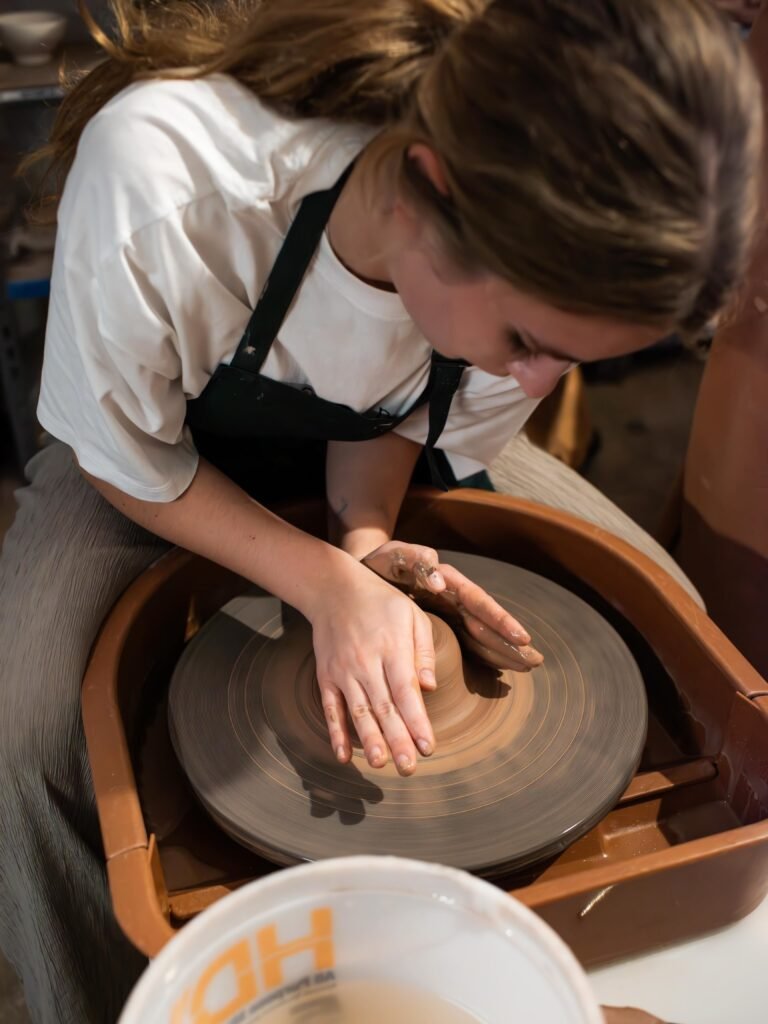
Once the basic form is pulled, slow the wheel down further for shaping, smoothing, and any detail work. Many potters work in the 30 to 40 RPM range here, sometimes slower.
A wheel spinning too fast during this stage makes it nearly impossible to do controlled, precise work. You genuinely can’t do much fine shaping at 300 RPM. This is exactly why the wheel needs to keep slowing down as your piece gets closer to finished.
How to Change Speeds Without Ruining Your Piece
Change speed gradually rather than snapping the pedal or dial to a new setting all at once. A sudden speed change while your hands are still on the clay risks marking the surface. It can also knock the piece off-center.
Good practice is to slowly ease your hands off the clay as you adjust speed. Avoid changing speed and touching the clay at the same moment. This small habit prevents a lot of avoidable mistakes.
A Wheel Built for Precise Speed Control: Shimpo VL Whisper
A wide speed range and steady electronic control make this easier. You can hit the right speed at every stage, from fast centering through slow, careful finishing work.
Best Budget Option With a Real Speed Range: Shimpo Aspire
A dependable variable speed range at a lower price point. It’s still wide enough to cover the full centering-to-finishing sequence most potters need.
Foot Pedal vs Hand Control
Most full-size wheels use a foot pedal for speed control. This frees both hands to work the clay at every stage. That matters most during centering and pulling, where you genuinely need both hands engaged.
Some compact and tabletop wheels use a hand dial instead. The Speedball Artista ships with variable speed hand control as standard, with a foot pedal available as an add-on. Either system works. A foot pedal generally gives you finer real-time control once both hands are busy shaping the piece.
Belt-Drive vs Direct-Drive Speed Feel
Belt-driven wheels, like the Brent C, tend to hold speed under load with strong, dependable torque. Direct-drive wheels respond a bit differently. They’re often described as smoother at very low speeds, since there’s no belt tension to work against.
Neither system is objectively better for speed control. The real difference shows up most at the extremes. Think very slow finishing speeds or very heavy centering loads, where each system’s design shows its particular strengths.
Speed Also Depends on Piece Size
Beyond the general stage-by-stage guide, the size of your piece shifts these ranges too. Smaller pieces can generally handle faster speeds at every stage than larger ones. There’s simply less mass fighting the centrifugal force at any given RPM.
Trimming follows a similar logic to shaping. You want it fast enough for a clean cut, but slow enough to keep real control. This usually lands in a moderate range rather than at either extreme.
There’s Room for Personal Preference Too
These ranges are a strong starting point, not a rigid rule. Some potters prefer working slightly slower at every stage because it gives them more time to react. Others prefer working faster because it feels more responsive under their hands.
Experiment within the general ranges described here. Don’t treat any single number as the one correct speed. What matters most is that you’re deliberately choosing a speed for each stage. Don’t just default to whatever felt fine a moment ago.
Ready to Get More Control Over Your Throw?
Browse our complete pottery wheel collection to find a wheel with the speed range and control your technique needs.
