
The Skutt 1027 is a popular home studio choice, but it isn’t automatically the best size for every home. Skutt’s own guidance actually points toward smaller models instead. The 818 and 822 are their recommended fit for home studios specifically. The 1027 is a real step up in size, output, and cost. Whether that step makes sense for you depends on your actual production volume, not just what’s popular online.
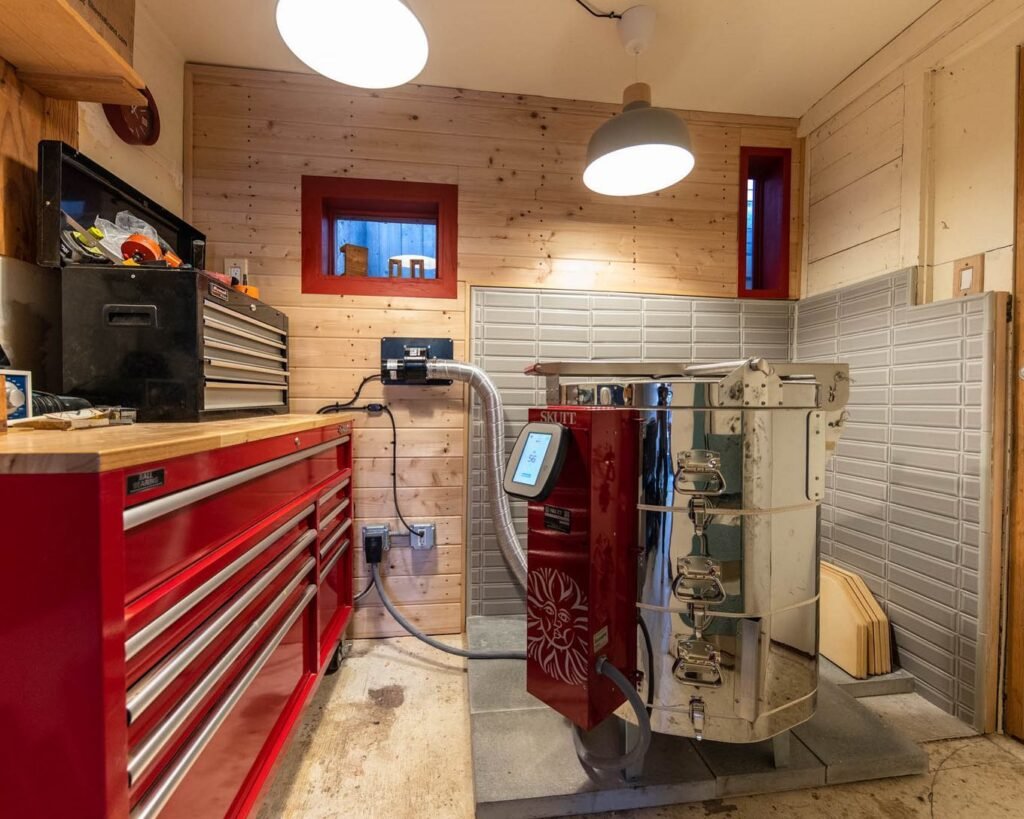
This guide breaks down the real size options. It covers what Skutt itself recommends, and how to pick the size that actually fits your studio.
What Skutt Actually Recommends for Home Studios
This surprises a lot of first-time buyers. Skutt’s own guidance points toward the 818 and 822 models as their pick for home studios. The 1027 tends to fit garages and larger dedicated spaces better than a smaller indoor room.
That doesn’t mean the 1027 is wrong for a home. Plenty of home potters run one successfully. It just means “home studio” covers a wide range of actual spaces. Skutt’s guidance assumes a smaller, more contained room than many buyers actually have.
Comparing the Real Sizes
The Skutt 818 has an 11-inch chamber diameter. It holds 2.3 cubic feet, roughly enough for a dozen mugs across two shelves. It’s compact enough for a genuine indoor spare room or closet-sized space.
The Skutt 1027 steps up to a 23-inch interior diameter and 27 inches deep. That gives you 7 cubic feet of usable chamber space. That’s tall enough to fire a 23-inch pot and wide enough for a 21-inch platter. This is a meaningfully bigger kiln, both in output and in the physical footprint it needs.
The Skutt 1227 goes bigger still, at a 28-inch wide, 27-inch deep barrel chamber totaling close to 9.9 cubic feet. This size shows up most often in academic studios. Production potters and sculptors working at real scale favor it too, not typical home use.
Quick Size Comparison
| Model | Chamber Size | Price | Best For |
|---|---|---|---|
| Skutt 818 | 2.3 cu ft, 11″ diameter | $1,585.00 | Skutt’s official home studio pick, tight indoor spaces |
| Skutt 1027 | 7 cu ft, 23″ diameter | $3,145.77 | Growing home studios, garages, dedicated rooms |
| Skutt 1227-3 | 9.9 cu ft, 28″ wide | $3,245.77 | Production potters, academic studios, sculptors |
What Actually Determines the Right Size
Your real production volume matters more than any general size recommendation. If you’re firing small batches occasionally, a smaller kiln avoids wasted electricity on partial loads. Say you’re firing weekly for a growing shop or wholesale accounts, though. A larger kiln reduces how often you’re running it at all.
Space and clearance matter just as much as chamber size. Skutt specifically requires 18 inches of clearance in every direction from the kiln to any wall. A 1027 needs real floor space to meet that requirement safely, not just room for the kiln box itself.
Furniture Costs Scale With Size Too
Shelf and post costs grow along with kiln size, which is easy to overlook when comparing sticker prices alone. An 818 uses smaller 15-inch half shelves. A 1027 needs larger shelves, either 20 to 22-inch half shelves or a 19.5-inch full round. A 1227 steps up again to 26-inch half shelves.
This matters because furniture isn’t a one-time cost. Shelves wear out, warp, and eventually need replacing over years of use. A bigger kiln means bigger, more expensive replacement shelves down the road, not just a bigger upfront kiln price.
A Real Potter’s Decision Process
One documented example is worth sharing here. A potter comparing the Skutt 1027 against the larger 1227 chose the bigger option. She was planning for business growth, not just her needs at the time. She didn’t want to feel limited by kiln space as her shop scaled up.
That same potter also had to check her home’s available amperage first. A larger kiln draws meaningfully more power, after all. She called an electrician before buying, not after, to confirm her home could actually support the kiln she wanted.
When to Go Smaller Than the 1027
Choose the Skutt 818 or a similar smaller model in a few real cases. Maybe you’re working in a genuinely tight indoor space. Maybe you’re firing occasional or smaller batches. Or maybe you just want a simpler, cheaper electrical install.
When to Go Bigger Than the 1027
Choose the Skutt 1227-3 or a larger model in a different set of cases. Maybe you’re already planning for real production growth. Maybe you regularly fire large-scale work. Or maybe you’re running a program where several people share kiln time.
Skutt 1027
A genuine middle-ground size, offering 7 cubic feet of real studio capacity. It suits potters who’ve outgrown a small test kiln but don’t need production-scale output.
Should You Just Buy Bigger the First Time?
This is a real trade-off, not an obvious answer either way. Buying bigger than you need today avoids a second purchase later if your work grows. It also means a bigger upfront cost and a bigger electrical install. You may also waste electricity if you’re often firing small, partial loads in a kiln built for much more.
Buying exactly what fits your current output keeps costs lower now. The tradeoff is a possible upgrade down the road if your studio grows faster than expected. Neither choice is wrong. It comes down to how confident you feel in your near-term plans. That confidence is worth paying for, or not, depending on your situation.
Ready to Find Your Right Size?
Browse our complete kiln collection to compare chamber size and output across every model we carry.
