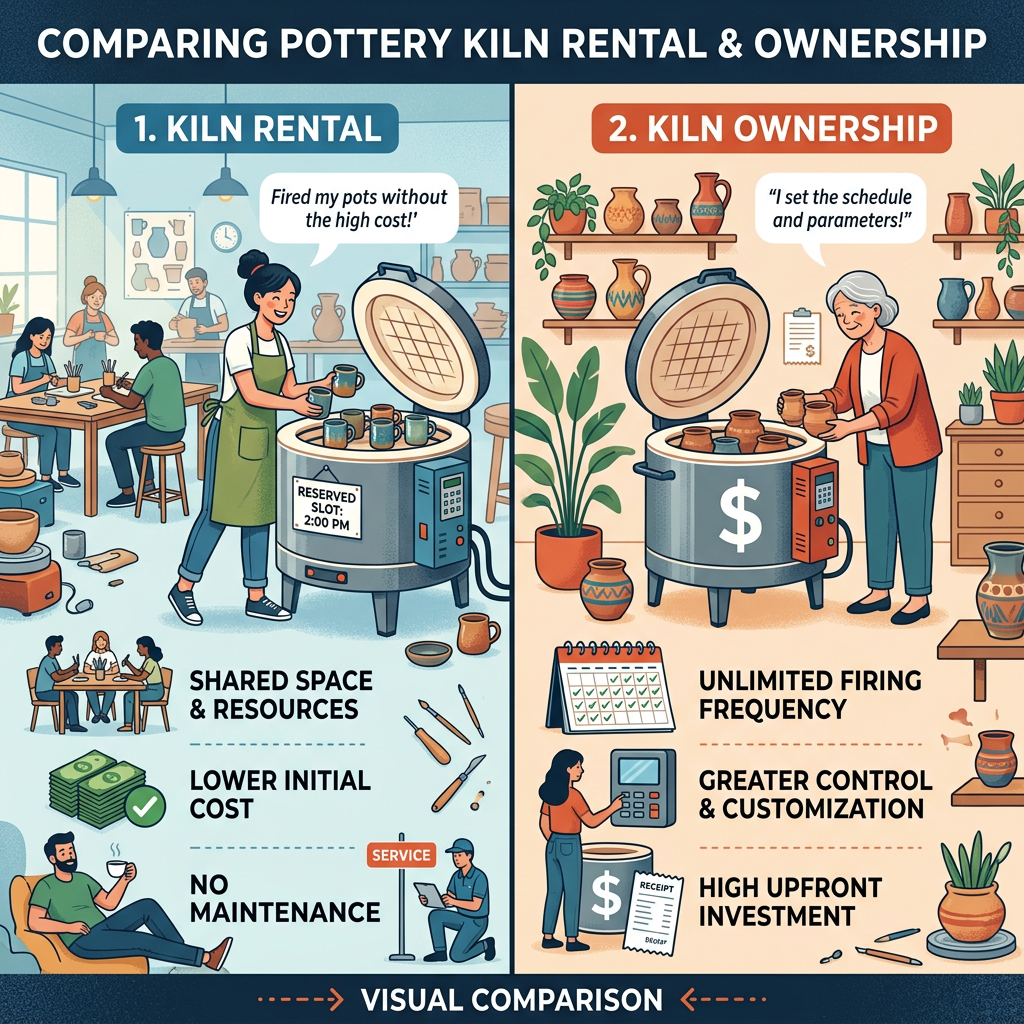
Kiln cost per firing is one of the most common questions from anyone new to buying or using a kiln. Most home electric kiln firings cost somewhere between fifty cents and sixteen dollars in electricity. The exact cost depends on kiln size, firing temperature, and your local electric rate. That range surprises most people. Firing your own work costs far less than most beginners expect.
This guide covers the simple formula behind kiln cost per firing. It includes real examples by kiln size, and how to estimate your own cost before you buy.
The Simple Formula Behind Kiln Cost Per Firing
Every kiln firing cost comes down to four numbers. You need the kiln’s power rating in kilowatts and the firing time in hours. You also need your electric rate per kilowatt-hour and a duty cycle adjustment. This last number matters because a kiln isn’t drawing full power the entire firing.
The formula looks like this: kW rating times firing hours times electricity rate times duty cycle equals cost per firing. Duty cycle usually falls between 50 and 75 percent. Elements cycle on and off rather than running constantly at full power.
Real Examples by Kiln Size
A small test kiln draws around 1.5 kW. Run it for a 2 hour firing at a 60 percent duty cycle. At 15 cents per kWh, it costs roughly $0.27 for that firing. Small test and jewelry kilns cost the least to run by a wide margin.
A mid-size 7 cubic foot kiln draws 8 to 11 kW. It typically costs between $8 and $12 for a full bisque firing at average U.S. electric rates. This size covers most home studio kilns.
A larger 10 cubic foot production kiln draws closer to 11.5 kW over a longer firing schedule. It can run $15 to $20 per firing. The exact cost depends on your local rate and the specific firing program used.
What Actually Affects Your Kiln Cost Per Firing
Your local electric rate matters most. Rates vary widely across the country. Some states charge around 8 cents per kWh, while others charge well over 30 cents. Check your own utility bill rather than assuming a national average applies to you.
Firing temperature matters too. A cone 6 glaze firing runs longer and hotter than a bisque firing. That increases both the hours and the average power draw across the longer cycle.
Kilns Built for Efficient, Predictable Firing Costs
Browse our complete kiln collection to compare kilowatt ratings and find a model that fits your firing budget.
Tracking Your Own Firing Costs Going Forward
Check your kiln’s data plate or manual for its exact wattage rating rather than estimating from cubic footage alone. This single number is the most important input in the whole formula.
Some digital kiln controllers calculate the cost of each firing automatically once you enter your local electric rate. If your kiln has this feature, it removes the guesswork entirely.
Ready to Budget for Your Own Kiln?
Browse our complete kiln collection to find a model that matches both your studio needs and your firing budget.