
Putting a kiln in your basement is allowed in most cases. It’s actually one of the most common home kiln spots. That said, “allowed” comes with real rules. Clearance space, electrical permits, and airflow all matter, and local rules can vary by city or county. This isn’t a simple yes or no question, but the path to a safe basement kiln is well known.
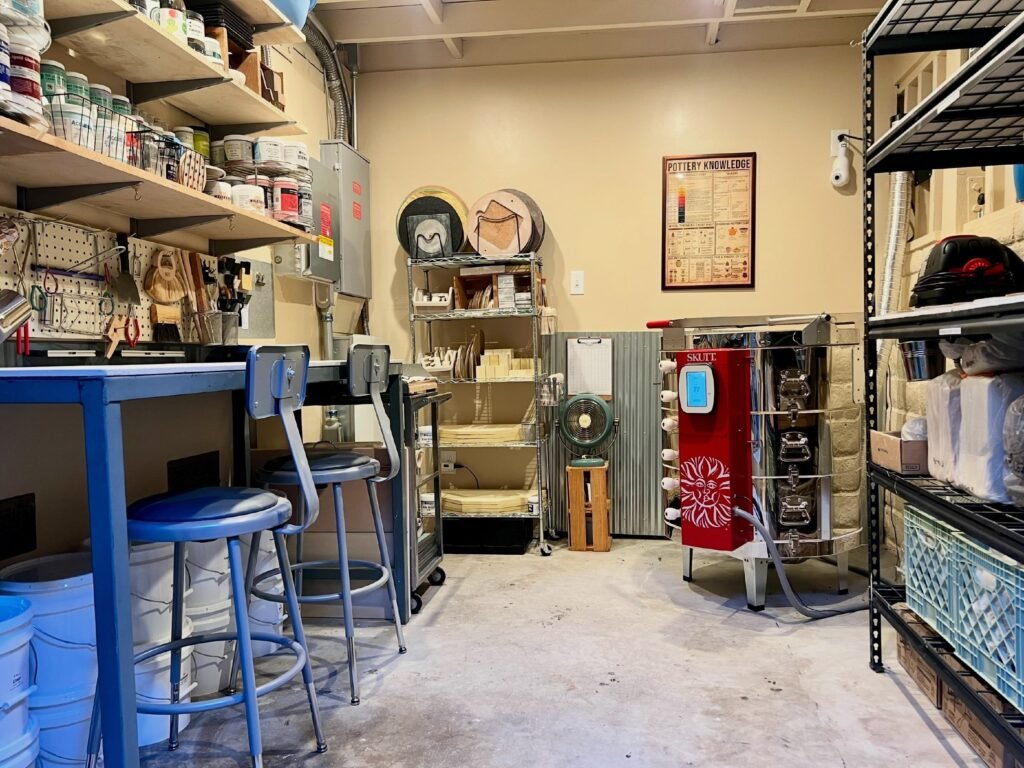
This guide covers what actually needs to be true before you install a kiln in your basement.
Why Basements Are a Common Spot for a Kiln in Your Basement Setup
Basements and garages are the two most common spots for a home kiln, based on advice from kiln makers themselves. Both offer separation from living space. Both often have concrete floors that handle heat well.
That said, a kiln maker’s advice is not the same as your local building code. Your specific city or county has final say, not a general tip from a kiln maker.
Clearance Requirements You Need to Know
Building codes require real clearance space around a kiln. It’s not just enough room to walk past it. Minimum spacing between a kiln and nearby walls typically runs at least 12 inches. More room is needed on the side holding the electrical or gas controls.
Keep flammable materials well away from the kiln area entirely. Paint, solvents, cardboard, and stored fabric all need to be stored elsewhere, not stacked near where you plan to fire.
Electrical Permits: The Part Most People Miss
A full-size kiln almost always needs its own power line. That line needs to be set up by a licensed electrician. This is truly non-negotiable for most kilns, not an optional upgrade.
Many local areas require a permit for this kind of work, separate from any general basement remodeling permit. Skipping this step can cause real problems later. This ranges from insurance issues to trouble at resale if the work wasn’t done to code.
Two Calls Worth Making Before You Install
Call your local building or code office and ask directly about kiln installation in a home basement. Some smaller towns may not have a ready answer, but asking on record protects you either way.
Call your homeowner’s insurance provider too. Some policies have rules or exclusions around kilns and similar heat-producing equipment. Confirming this ahead of time avoids a bad surprise after an incident.
Ventilation Matters as Much as Electrical Safety
A kiln needs real airflow, not just an open door to the rest of the basement. A vent system routes fumes outside instead of letting them build up in an enclosed space.
This matters even more in a basement than in a garage. Basements often have less natural airflow. They’re also closer to living spaces above.
Kilns Built for Home Installation: Studio Pro STP 120 Volt
This kiln runs on a standard 120V outlet. That can make the electrical side of a basement install much easier. It still needs the same clearance and airflow planning as any other kiln.
Ready to Plan Your Installation?
Browse our complete kiln collection to find a model suited to your space and electrical setup.
