
Setting up a pottery wheel at home is genuinely easier than most people expect. Unlike a kiln, a pottery wheel plugs into a standard household outlet. No special wiring, no electrician, and no dedicated circuit required for most models. If space and power have been holding you back, the wheel itself is rarely the real obstacle.
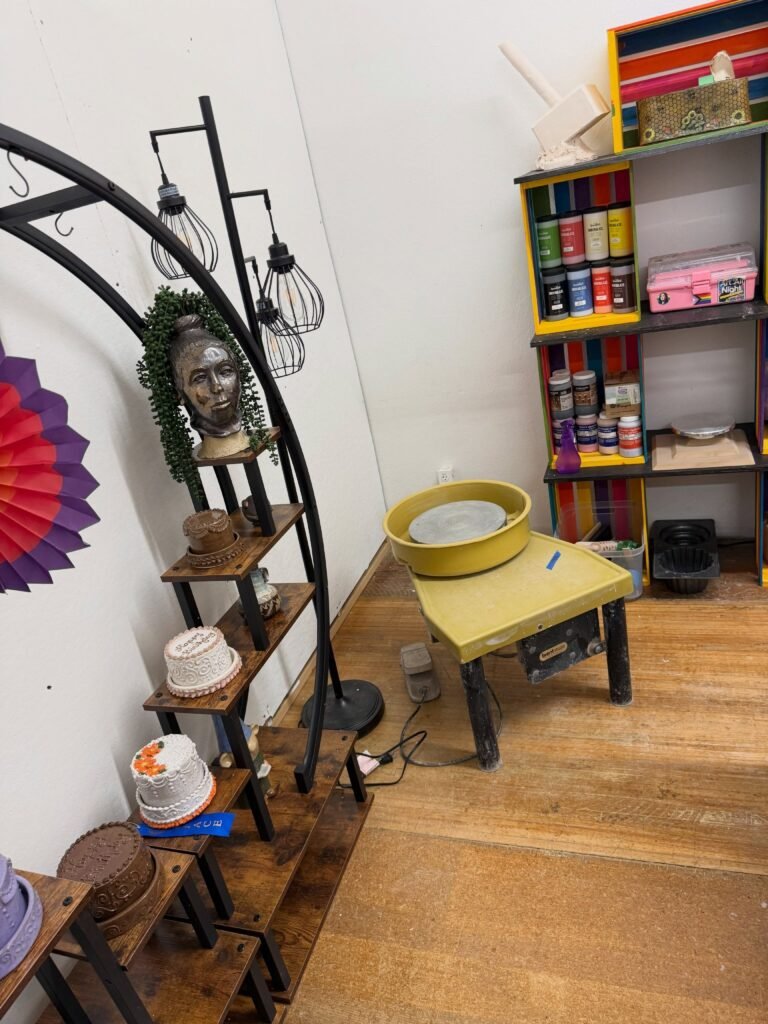
This guide covers what you actually need to get a wheel running at home. It also covers what to plan around before you buy.
Power: The Easy Part
Most electric pottery wheels run on a standard household outlet. It’s the same kind you’d use for a lamp or a kitchen appliance. This is very different from a kiln, which usually needs a dedicated 240V circuit.
Running a wheel is also cheap. A typical wheel costs well under a dime per hour of use at average electricity rates. Ongoing power cost is not something you need to budget around.
Space: What You Actually Need
A compact or tabletop wheel works well in a smaller home. Plan for a working area of roughly three feet by three feet. More room always makes cleanup and movement easier.
You’ll also want space nearby for a small worktable, basic tools, and a shelf for greenware to dry. None of this needs to be a dedicated studio room. A corner of a garage, spare room, or even a covered patio can work.
Best Wheel for a Small Home Setup: Speedball Artista
Compact and easy to move, this wheel fits well into a small home setup without demanding a dedicated room. It plugs into any standard outlet and stores easily when not in use.
Best Wheel for a Pottery Wheel at Home Studio Corner: Shimpo Aspire
Say you’ve claimed a permanent corner of a garage or spare room. This wheel offers more torque and a longer expected lifespan for regular home use.
What About the Mess?
Clay and water do create real mess, but it’s manageable with the right setup. Easy-clean flooring, like tile, vinyl, or sealed concrete, makes wet cleanup far simpler than carpet ever could.
A simple splash pan around the wheel head catches most slip and water before it spreads. Follow up with a damp mop after each session to keep the space usable without a deep clean every time.
One Thing to Plan For: Firing Your Work
A pottery wheel at home doesn’t require a kiln at home too. Plenty of potters throw at home and pay for firing at a local studio. Kilns need real electrical planning that wheels simply don’t.
Want to fire at home eventually? That’s a separate project with its own space and power needs. It’s worth planning for once your wheel setup feels comfortable.
Ready to Set Up Your Wheel?
Browse our complete pottery wheel collection to find a model that fits your home space.
