
Pug mill cost ranges widely. Small manual units run under $1,000, while full vacuum de-airing models built for daily studio use can run $6,000 or more. Most home and small studio potters land somewhere in the $3,000 to $6,500 range for a real, dependable machine. Knowing this range upfront helps you budget before comparing specific models.
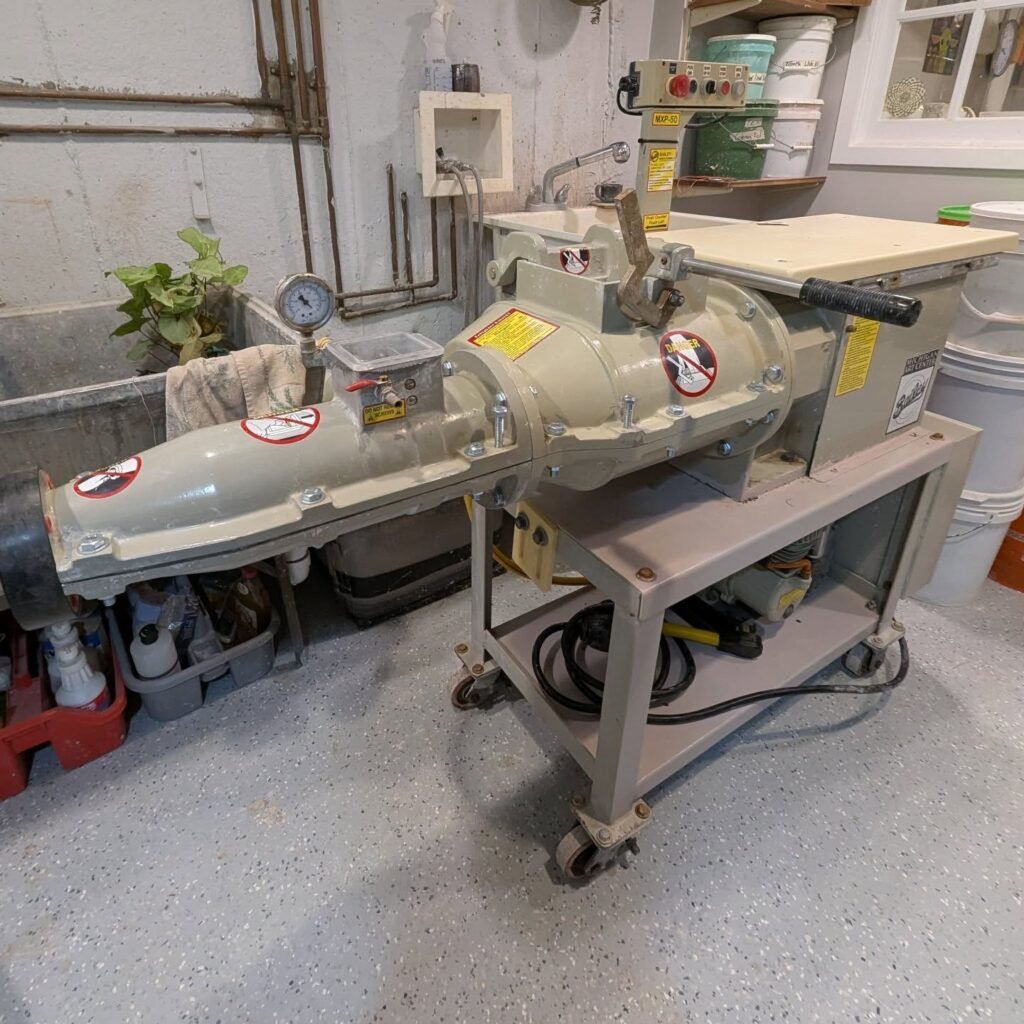
This guide breaks down what drives pug mill pricing and which price point fits your actual clay volume.
What Drives Pug Mill Cost
Vacuum de-airing is the biggest price factor. Non-vacuum models cost less. Vacuum de-airing matters most for porcelain and thin-walled work, where trapped air can cause bloating during firing.
Size and capacity matter too. A machine built to process larger batches costs more than a compact model. It needs a bigger motor and larger internal chamber to match.
Is a Pug Mill Worth the Cost for You?
Studios processing more than about 400 pounds of clay scrap a month typically see real savings. That’s often enough to justify the equipment cost. Below that volume, manual reclaim often makes more financial sense.
Track your actual scrap weight for a month or two before buying. Many potters overestimate how much reclaim they actually generate, which changes whether the investment pays off.
Best Value for Home Studios: Peter Pugger VPM-20SS
This is the most common recommendation for a home studio ready to invest in a real pug mill. It runs on standard 120V power and includes full vacuum de-airing.
Best for Higher Volume: Peter Pugger VPM-30
Built for studios processing clay in larger, steadier batches. The higher price reflects the bigger motor and chamber needed to keep up with heavier monthly volume.
Comparison
| Model | Price | Best For |
|---|---|---|
| Peter Pugger VPM-20SS | $3,195 | Home studios, moderate volume |
| Peter Pugger VPM-30 | $6,205 | Higher volume, shared studio use |
What You Get for the Price
A real pug mill saves real time. It replaces manual wedging and reclaim work that otherwise takes hours out of your studio week.
It also protects your work. Vacuum de-airing catches trapped air that hand-wedging can miss. This matters most in porcelain or fine detail pieces, where bloating is a real risk.
Ready to Find the Right Pug Mill?
Browse our complete pug mill collection to compare capacity and price across every model we carry.
